
Bob has kindly supplied the slides he used for his talk. They are self-explanatory, so rather than trying to use them to produce a ‘written report’, they are reproduced here as shown on the day. In addition there are some extra notes below that (a) capture comments on the day and (b) draw on answers to questions.
Slides 2 & 3.
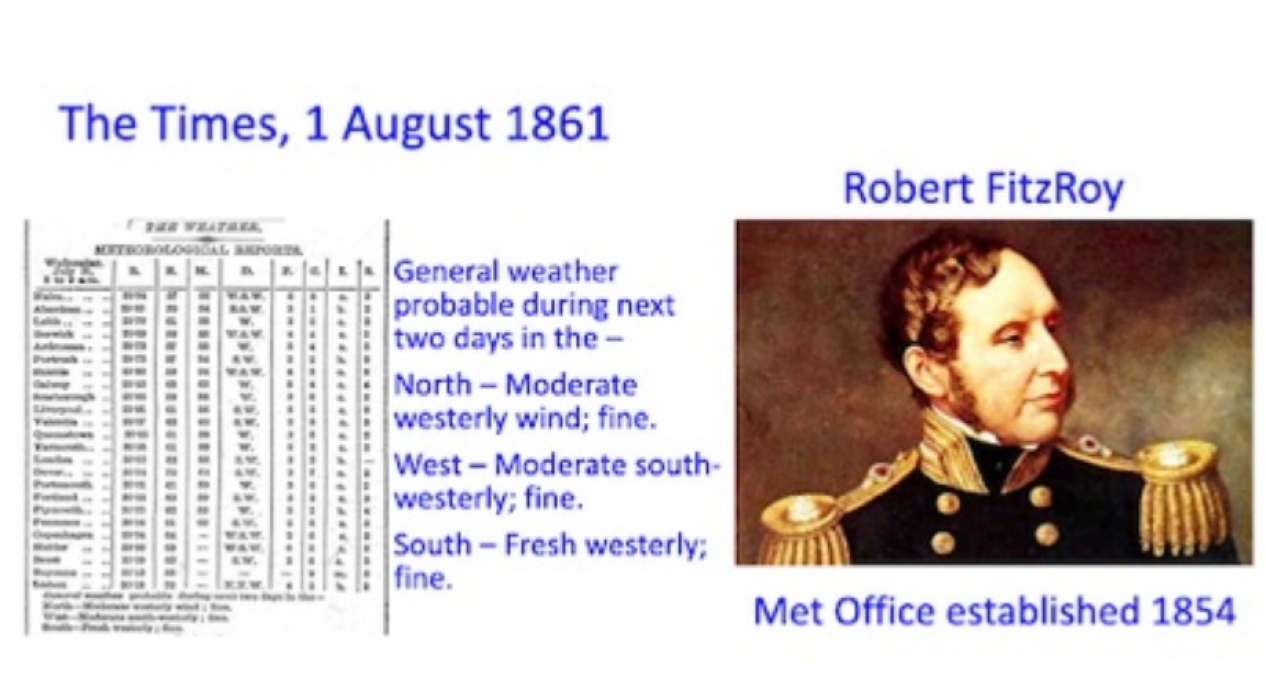
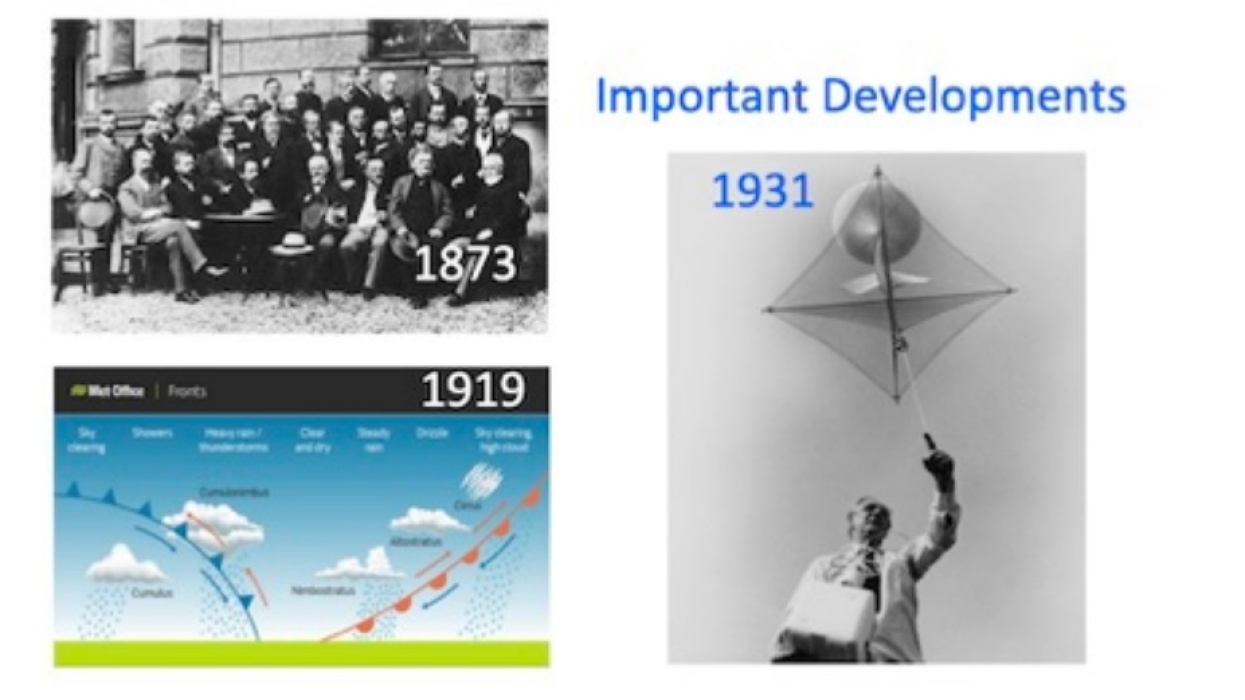
The development of a telegraph network meant that it was possible to know about the weather across the UK in near real time. This led to the issuing of shipping forecasts and the publication of the first public weather forecast in The Times in August 1861. Thereafter the ability to forecast the weather was enhanced by the establishment of the International Meteorological Organisation in 1873 to facilitate the international exchange of observations. This was followed by two important scientific and technological developments: an understanding of frontal systems and the use of radiosondes to obtain observations from above the ground.
Slide 4.
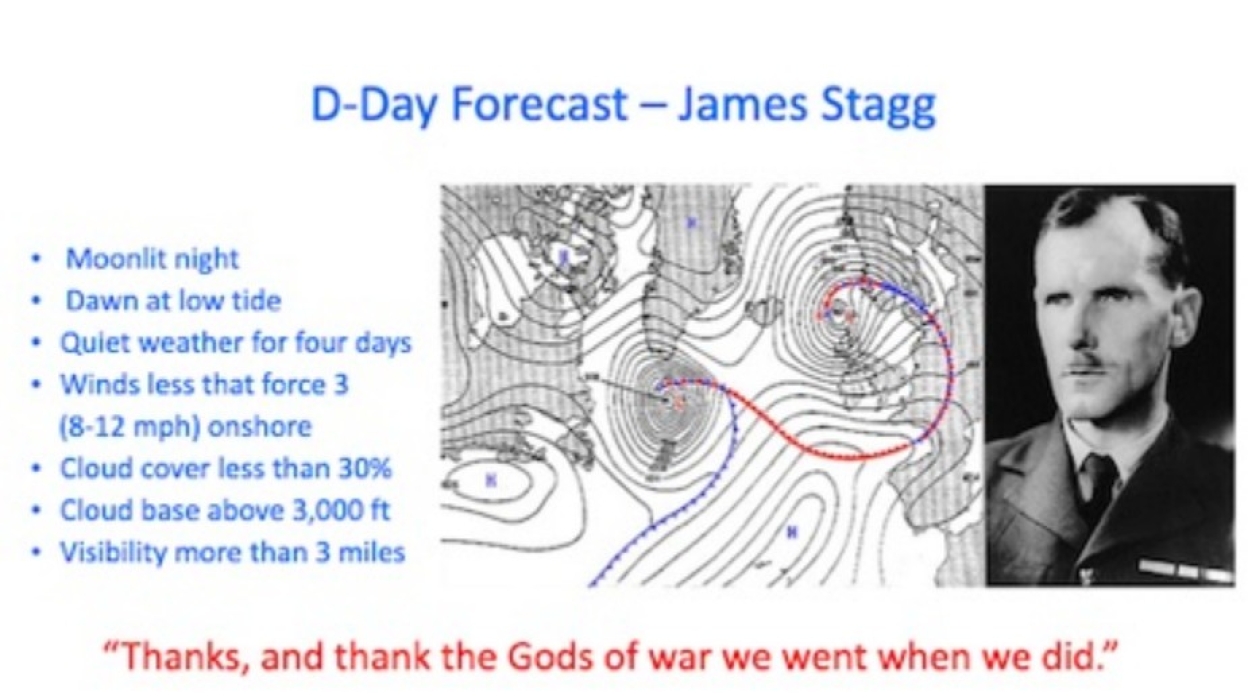
In the 1940s the forecasts were based on a careful scrutiny of observations, experience and some understanding of atmospheric processes. The D-Day forecast is perhaps the most important weather forecast ever made. Gp Capt. Stagg forecast a brief break in the weather for 6 June and on that basis General Eisenhower ordered the D-Day landings. Later Stagg sent a memo to Eisenhower explaining that if D-Day had been postponed to the next time there was the required low tide at dawn, the weather would have been dominated by the worst channel storm in 40 years and the landing would have been impossible.
 Slide 2 testing
 Slide 3
 Slide 4
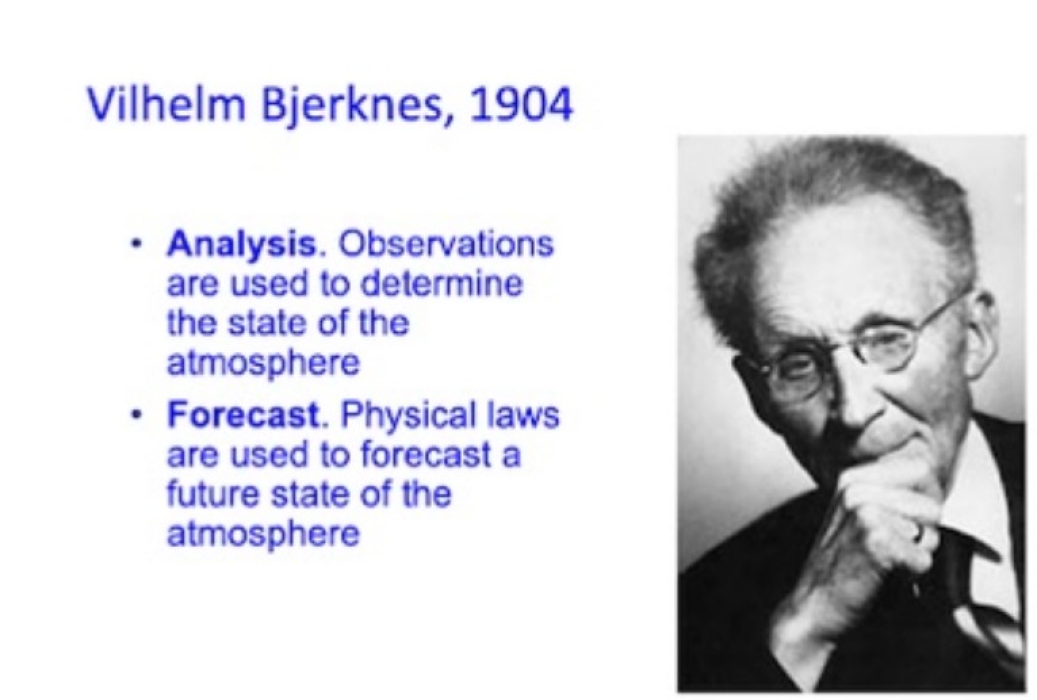
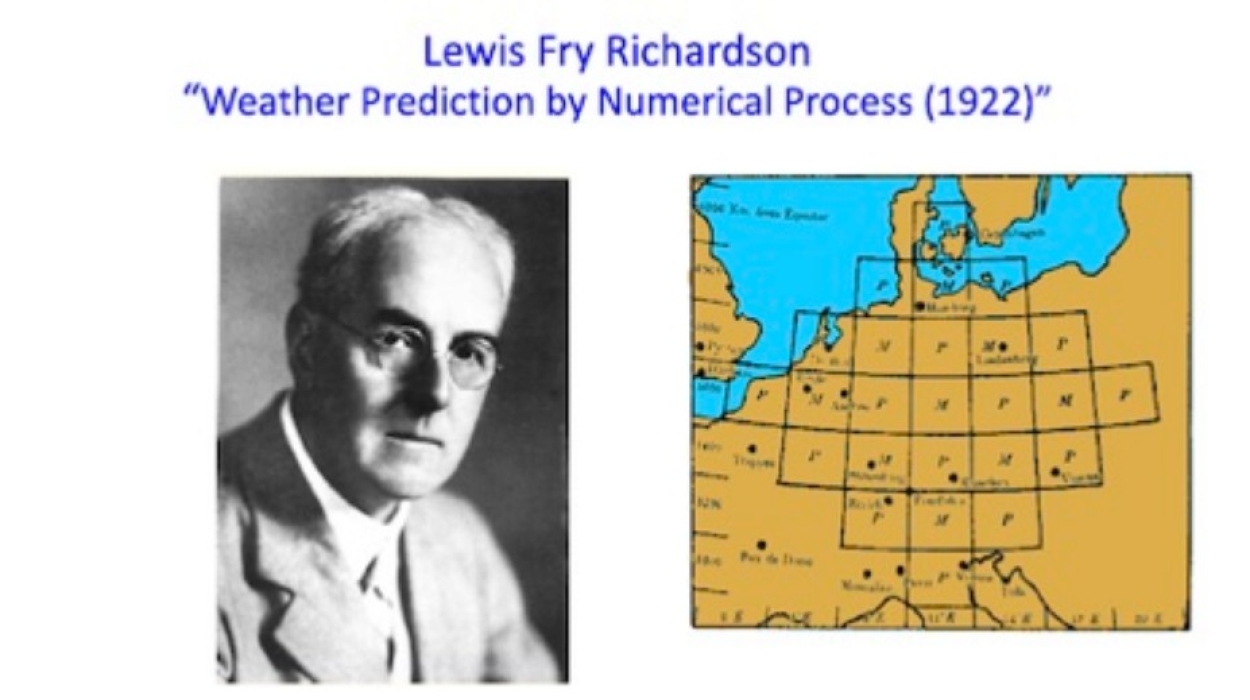
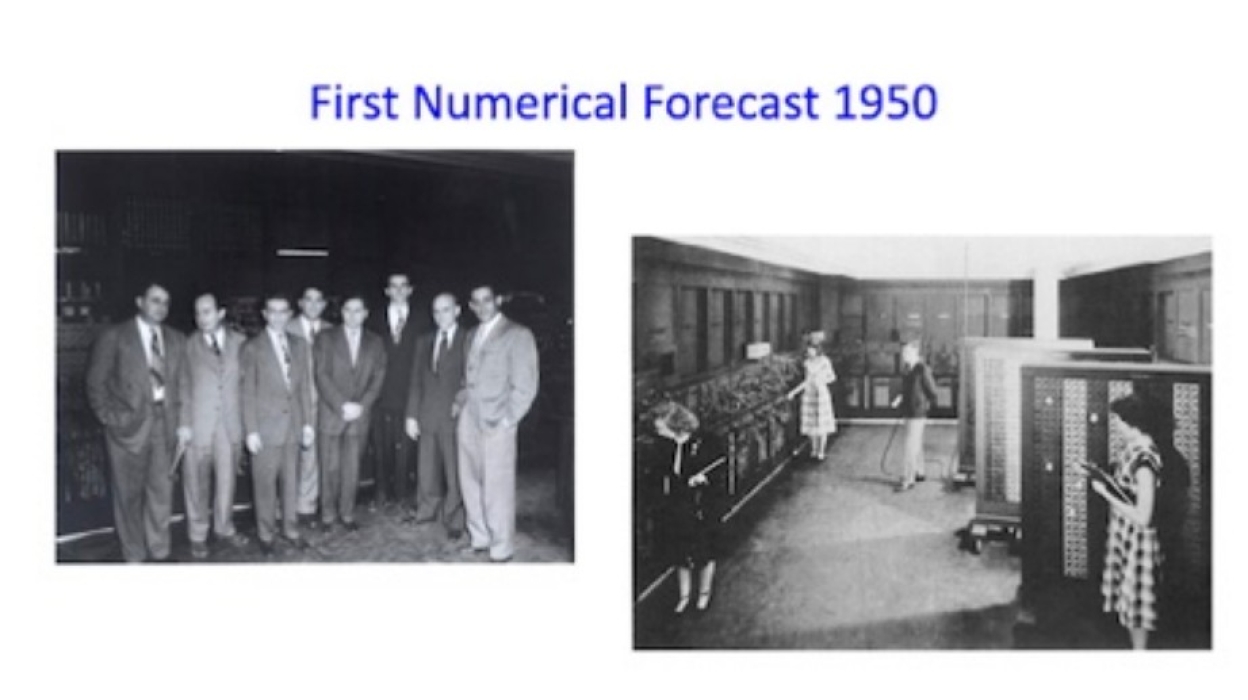
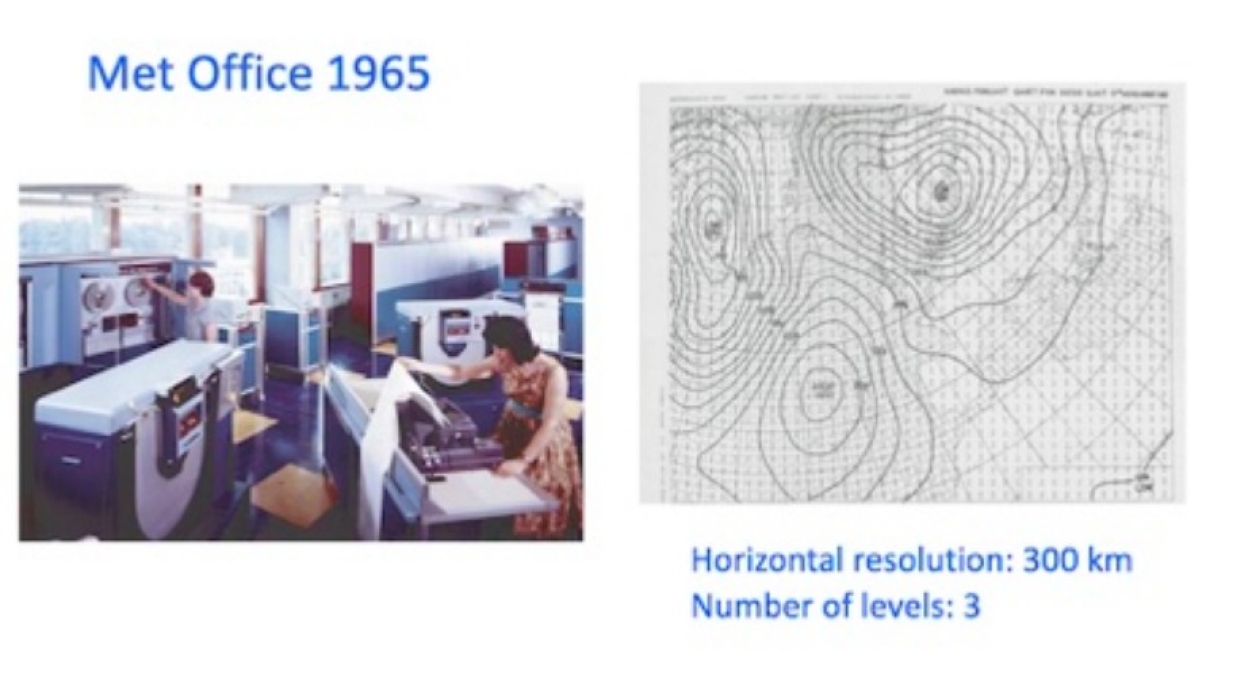
Nowadays weather forecasting is based on Numerical Weather Prediction (NWP). This was first proposed in 1904 and later demonstrated in principle by L F Richardson using hand calculations. The first numerical forecast using a computer was made in 1950. But it was not until 1965 that the Met Office had a computer powerful enough to produce operational forecasts.
 Slide 5
 Slide 6
 Slide 7
 Slide 8